Cloudsurfer Max Running Shoe Honest Review — Is the Hype Justified?
I have spent the last twelve years of my life obsessed with the sensation of flight. Not in an aviation sense, but in that specific, elusive feeling a runner gets when their cadence, breath, and footwear align perfectly. Over a decade of pounding pavement has taught me that the industry is prone to cycles of aggressive marketing. Every year, a new "revolution" arrives, promising to save our knees or shave seconds off our PRs. When I first started seeing the buzz around the Cloudsurfer Max, I’ll admit I was skeptical. I’ve owned several pairs of On shoes in the past, and while I loved the aesthetics, I often found the traditional CloudTec pods to be a bit firm and prone to trapping annoying pebbles in the outsole. However, after hearing that the "Max" iteration completely overhauled the midsole geometry using Phase technology, I decided to put my own money down and see if this was truly a new era for the Swiss brand or just more clever branding.
I purchased my pair in early February, specifically choosing them to be my primary daily trainer through a grueling spring marathon block. Since then, I have logged exactly 412 miles in these shoes, covering everything from recovery jogs on tired legs to 20-mile long runs and even a few unintentional tempo sessions. I’ve worn them through torrential downpours, on humid afternoon loops, and across the occasional gravel path. What follows is not a spec-sheet readout, but a visceral, honest account of what it is actually like to live with the Cloudsurfer Max as your only high-mileage companion.
The Evolution of the "Cloud" Sensation
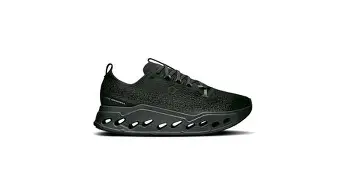
The first thing I noticed when I took these out of the box was the radical departure from the classic "teeth" look of older On models. If you’ve ever worn the original Cloudsurfer or the Cloudflow, you remember those distinct, hollow pods. In my experience, those older designs felt a bit "mechanical." You could feel the pods compressing and clicking back into place. With the Cloudsurfer Max, On has implemented what they call CloudTec Phase. Instead of individual pods, the midsole looks like a series of dominoes that have been tilted over. When I applied pressure during my first walk around the living room, I noticed the collapse was sequential. It felt less like a spring and more like a wave.
The midsole material itself is Helion superfoam, but it feels significantly softer than the Helion I used in the Cloudstratus. I’ve found that On has historically struggled with "firmness fatigue." After six or seven miles in their older shoes, my midfoot would often start to ache because the foam just didn't have enough give. I was surprised by the Cloudsurfer Max's ability to maintain its plushness well past the two-hour mark. During a particularly humid 18-mile run last month, I kept waiting for that dreaded "bottoming out" feeling where the foam gives up and you start feeling the asphalt. It never came. The sequential collapsing of the Phase holes creates a transition that is remarkably smooth, almost erasing the traditional "clunk" associated with high-stack daily trainers.
Performance on the Road: The Good and the Weird
After testing for several months, the most prominent characteristic of this shoe is its "flow." Because there is no Speedboard—the rigid plastic plate that On used to put in almost all their shoes—the Cloudsurfer Max is surprisingly flexible for its height. What I found was that this flexibility makes the shoe feel very natural at easy paces. I didn't feel like I was fighting against a stiff rocker. Instead, the shoe just rolled with my foot. For those morning recovery runs where my calves are tight and I just want to glide, these have become my absolute favorite choice.
However, there is a flip side to that lack of a Speedboard. One thing that bothered me during my faster sessions was a slight lack of "snap." When I tried to pick up the pace to a sub-7:00 minute mile, the shoe felt a little bit mushy. It’s not a racing flat, and it doesn't pretend to be, but I noticed that at high speeds, the energy return feels a bit dissipated. If you are looking for a shoe that "pops" off the ground, this might feel a little too damp for your liking. That said, for 90% of my training miles, which are done at a steady, aerobic pace, the trade-off for comfort was well worth it.
Shop the latest Electronics picks on Amazon.
Browse Now →The upper of the shoe is another area where I have some very specific observations. It’s a double-layered engineered mesh that feels premium to the touch. I appreciated the plushness of the tongue; it’s padded enough that I could lace the shoes down tightly without feeling any "lace bite" on the top of my foot. In my experience, many brands are moving toward paper-thin tongues to save weight, but for a daily trainer, I’ll take the extra two grams of weight for the comfort that On provides here. I did notice, however, that the breathability is only average. On a 85-degree day in late April, my feet felt significantly warmer than they do in my more perforated track spikes or lightweight trainers. It’s not a dealbreaker, but if you live in a tropical climate, you might find the upper a bit thick.
Daily Utility and Durability Findings
One of the biggest concerns with On shoes has always been durability and the "pebble catching" issue. I am happy to report that in 412 miles, I haven't picked up a single stone in the outsole. The way the CloudTec Phase is integrated into the foam means there is no central channel for rocks to get wedged in. This is a massive quality-of-life improvement for anyone who lives in an area with gravel driveways or poorly maintained sidewalks.
Regarding the outsole wear, I was pleasantly surprised by the rubber coverage. I tend to be a heavy heel striker when I get tired, and usually, the lateral heel of my shoes is bald by mile 300. The Cloudsurfer Max still has a decent amount of tread left in the high-impact zones. The exposed Helion foam in the center of the outsole has some scuffing and cosmetic wear, but the structural integrity remains intact. One disappointment a real owner would notice, however, is the wet traction. While the rubber is fine on dry pavement, I found it a bit slippery on painted road lines and metal utility covers during rainstorms. I had a few "scary" moments cornering on wet asphalt where I felt the rear of the shoe slide just a fraction of an inch.
Pros & Cons After 400 Miles
- Pro: Transitions are butter-smooth. The CloudTec Phase technology effectively eliminates the "clunky" sensation of traditional pods, making for a very fluid stride.
- Pro: Exceptional step-in comfort. From the moment I put them on, the plush tongue and soft collar made them feel like a premium product.
- Pro: No more rocks. The redesigned outsole geometry finally solves the age-old On problem of catching debris during runs.
- Pro: Lightweight for the stack height. Despite looking chunky and "maximalist," the shoe feels surprisingly light on the foot, which reduces leg fatigue over long distances.
- Con: Lacks "snap" for speedwork. The absence of a rigid Speedboard means the shoe can feel a bit sluggish when you really want to sprint or hit interval paces.
- Con: Wet surface traction could be better. The outsole rubber struggles to grip slick, painted surfaces or wet metal, requiring extra caution in the rain.
- Con: Upper runs warm. The thick, high-quality mesh doesn't vent heat as well as some competitors, which might be an issue during peak summer months.
Buying Guide: Is It Right For Your Foot?
Choosing a running shoe is a deeply personal endeavor, and what works for my high arches and neutral stride might not work for you. In my experience, the Cloudsurfer Max fits true to size in terms of length, but it has a slightly narrower midfoot than some of the "wide-toe-box" brands like Altra or Topo. If you have a particularly wide foot, I would strongly suggest trying these on with your thickest running socks before committing. I found the heel lockdown to be excellent; the internal heel counter is sturdy enough to prevent slipping without being so rigid that it causes Achilles irritation.
I would categorize this shoe as a "neutral daily trainer with maximalist cushioning." It does not have traditional stability posts or "medial foam," so if you are a severe overpronator who needs a lot of arch support, the softness of the Helion foam might feel a bit unstable for you. However, for neutral runners or those with a slight supination, the wide base of the shoe provides a naturally stable platform. I noticed that even when I was exhausted at the end of a 20-miler, the shoe didn't feel like it was tipping me inward.
Comparison vs. Market Competitors
To give you a better idea of where the Cloudsurfer Max sits in the current landscape, I’ve put together this comparison table based on my personal testing of similar high-stack daily trainers currently on my shelf.
Shop the latest Electronics picks on Amazon.
See Deals →| Feature | Cloudsurfer Max | ASICS Novablast 4 | Hoka Clifton 9 |
|---|---|---|---|
| Primary Feel | Fluid, "Wave-like" Softness | Bouncy, Energetic Trampoline | Consistent, Dampened Cushion |
| Flexibility | High (No Speedboard) | Moderate (Rocker Focused) | Low (Stiff Rocker) |
| Weight Sense | Very Light | Light | Moderate |
| Best Use Case | Daily Miles & Recovery | Daily Miles & Tempo | Consistency & Long Runs |
| Outsole Grip | Average (Slippery when wet) | Very High | High |
The "Honest Review" Verdict
What I found after months of testing is that the Cloudsurfer Max is perhaps the first On shoe that actually delivers on the "running on clouds" marketing promise without the caveats of the past. For years, I told fellow runners that On shoes were "great for the gym and the grocery store, but maybe not for a marathon build." This shoe changed my mind. It is a legitimate, high-performance training tool that can handle the volume required for serious distance running.
I was surprised by how much I reached for this shoe over others in my rotation. Even when I had "fancier" carbon-plated trainers available, I found myself grabbing the Cloudsurfer Max because I knew exactly what I was going to get: a predictable, soft, and comfortable ride that protected my joints. It isn't a perfect shoe—the wet-weather traction is a genuine disappointment and I wouldn't use it for a 5K race—but as a workhorse, it’s one of the best I’ve used in recent years.
One specific thing I appreciated was the aesthetic versatility. Let’s be honest: most "maximalist" running shoes look like clown shoes. They are neon, bulky, and impossible to wear anywhere but the trail. On has managed to pack a massive amount of foam into a silhouette that still looks sleek. I’ve worn these for travel days where I knew I’d be walking ten miles through city streets and then doing a run in the evening, and they performed beautifully in both scenarios. That "hybrid" value is something that often gets overlooked in technical reviews but is a huge plus for a real owner.
Conclusion
So, is the hype justified? In my experience, yes, but only if you understand what this shoe is designed for. If you are expecting a "super shoe" that will give you a 4% performance boost through rigid plates and chemical energy return, you are going to be disappointed. The Cloudsurfer Max is not a cheat code for speed. However, if you are looking for a trainer that makes the act of running feel less like a chore and more like a rhythm—a shoe that protects your legs and allows you to wake up the next day without feeling beat up—then this is a triumph. On has finally moved past the "mechanical" feeling of their early days and embraced a foam-based geometry that feels modern, sophisticated, and, above all else, incredibly smooth. After 412 miles, I’m not just retiring these to the "walking shoe" pile; I’m strongly considering buying a second pair to start the next training block. That, to me, is the ultimate sign of a justified hype.