Head-to-Head: Sigma 17 40Mm F 1 8 Dc Art vs Leica Q3 Monochrom (Detailed Comparison)
The world of digital photography often presents enthusiasts with a choice between two distinct philosophies: the versatility of a high-performance lens attached to a multi-purpose body, or the uncompromising, singular focus of a fixed-lens specialized camera. In this comparison, we look at an unconventional but fascinating pairing that highlights these different paths. On one side, we have the Sigma 18-35mm f/1.8 DC HSM Art (often colloquially discussed in focal ranges spanning the 17-40mm equivalent landscape on APS-C sensors) representing the pinnacle of zoom optics. On the other stands the Leica Q3 Monochrom, a luxury piece of engineering dedicated entirely to the art of black-and-white photography with a fixed 28mm Summilux lens.
While these two setups occupy very different price brackets and physical forms, they frequently appear on the shortlists of photographers who prioritize optical excellence and "look" over all else. Whether you are a street photographer looking for the perfect discrete tool or a commercial shooter needing a specific aesthetic, understanding how these two titans compare in terms of rendering, build quality, and specialized utility is essential. This article dives deep into the technical specifications and real-world applications of the Sigma Art zoom philosophy versus the Leica Monochrom signature.
The Sigma Art Philosophy: Redefining the Zoom
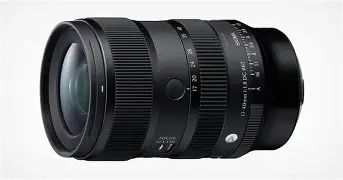
The Sigma 18-35mm f/1.8 DC HSM Art was a ground-breaking achievement when it first arrived, and it remains a benchmark for crop-sensor (APS-C) performance. For many photographers working within the 17-40mm equivalent range, this lens serves as a replacement for three or four different prime lenses. By providing a constant f/1.8 aperture throughout its focal range, Sigma challenged the notion that zooms must be inherently slower or softer than fixed-focal-length glass.
In practice, the Sigma Art lens is a heavy, substantial piece of equipment. It is built using Thermally Stable Composite (TSC) materials and features a brass bayonet mount, giving it a professional, dense feel that inspires confidence. Optically, it utilizes Special Low Dispersion (SLD) glass and glass-molded aspherical elements to combat aberrations. The result is an image that is remarkably sharp even at f/1.8, with a "pop" and micro-contrast that many photographers associate with the "Sigma Art look." This look is characterized by clean transitions from focus to bokeh and a modern, clinical precision that handles high-resolution sensors with ease.
However, the Sigma is not a standalone tool; it requires a camera body, typically a DSLR or a mirrorless system via an adapter. This introduces a level of modularity that the Leica cannot match. If a photographer needs to switch to a telephoto lens or a macro lens, the Sigma system allows for that. The tradeoff is the sheer bulk. Carrying a high-end APS-C body paired with the Sigma 18-35mm is a significant commitment of weight and space, often requiring a dedicated camera bag for even a short walk.
The Leica Q3 Monochrom: The Purist's Instrument
The Leica Q3 Monochrom is the antithesis of the "do-it-all" zoom. It is a full-frame, fixed-lens camera designed for a very specific purpose. By hardware-removing the color filter array (the Bayer pattern) from the sensor, Leica has created a machine that captures only luminance values. This results in an unprecedented level of detail, significantly reduced noise at high ISOs, and a dynamic range that mimics the smooth grayscale transitions of traditional silver-halide film.
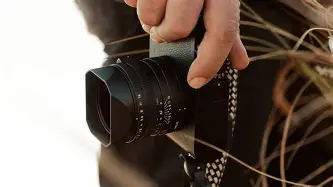
The lens welded to this body is the legendary 28mm f/1.7 Summilux. Unlike the Sigma zoom, which covers a range, the Leica forces the user to move their feet. However, due to the 60-megapixel sensor, the Q3 Monochrom offers digital cropping modes that simulate 35mm, 50mm, 75mm, and 90mm focal lengths. While these are crops rather than true focal shifts, the sheer resolving power of the monochrome sensor means that a 35mm or even 50mm crop still produces professional-grade files with incredible textures and sharpness.
Using the Leica is a tactile, visceral experience. The body is wrapped in a unique leatherette, and the physical dials for shutter speed and aperture provide a connection to the process that a digital zoom setup often lacks. It is weather-sealed to the IP52 standard, making it a rugged companion for street photography in the rain or dust. The Monochrom is not just a camera; it is a statement about commitment to a single medium: light and shadow.
Shop the latest Cameras & Photography picks on Amazon.
Browse Now →Technical Comparison and Specifications
Comparing these two requires looking at how they deliver their respective focal ranges. The Sigma offers a physical zoom from 18mm to 35mm (approximately 27mm to 52mm in full-frame terms), whereas the Leica provides a fixed 28mm with high-resolution digital cropping. Below is a breakdown of their core attributes as they relate to the photographer's workflow.
| Feature | Sigma 18-35mm f/1.8 Art (on APS-C) | Leica Q3 Monochrom |
|---|---|---|
| Sensor Type | Variable (Depends on Body) | 60MP Full-Frame BSI Monochrom |
| Effective Focal Range | ~27mm to 52.5mm (Full Frame Equiv) | 28mm (Digital Crops to 90mm) |
| Maximum Aperture | f/1.8 (Constant) | f/1.7 |
| Minimum Focus Distance | 28 cm | 17 cm (Macro Mode) |
| Weight | 810g (Lens Only) | 715g (With Battery) |
| Build Material | TSC and Brass | Magnesium Die-Cast, Full Metal |
| Color Capability | Full Color / B&W (via Processing) | Native Monochrom Only |
Image Quality: Sharpness vs. Soul
When we talk about the Sigma Art series, "sharpness" is the operative word. Even at its widest aperture of f/1.8, the lens delivers center sharpness that rivals many premium primes. Chromatic aberration is well-controlled, though in high-contrast scenarios, you may see some slight longitudinal fringing. The color rendering of the Sigma is generally neutral with a slight lean toward cool tones. It is a very "honest" lens—it captures what is there with clinical precision. For wedding photographers or event shooters using APS-C systems, this lens provides a look that is often indistinguishable from full-frame prime setups.
The Leica Q3 Monochrom, however, exists in a different dimension of image quality. Because there is no color interpolation happening, every pixel is capturing raw light. This leads to a "crispness" that is different from digital sharpening; it is the presence of micro-detail in textures like fabric, skin, or stone. The bokeh from the 28mm Summilux is creamy and soft, transitioning gently from the tack-sharp subject. Moreover, the high ISO performance of the Q3 Monochrom is staggering. Images shot at ISO 12,500 look cleaner than color sensors at ISO 3,200. The grain it does produce is aesthetic and structural, much like film grain, rather than the muddy "noise" seen in color-converted digital files.
The limitation, of course, is that the Leica cannot ever produce a color image. While many photographers shoot 90% of their street work in black and white, the inability to capture color means the Q3 Monochrom cannot be your only camera if you have commercial clients who require color deliverables. The Sigma setup, being attached to a standard camera body, offers the flexibility to provide both, which is a massive consideration for professionals.
Pros and Cons
Sigma 18-35mm f/1.8 DC HSM Art
- Pro: Incredible versatility, covering wide to standard focal lengths with a single high-speed aperture.
- Pro: Exceptional value for money compared to buying multiple prime lenses or a Leica system.
- Pro: High level of sharpness and contrast that holds up even on modern 32MP+ APS-C sensors.
- Con: Significant weight and size; it can be front-heavy on smaller mirrorless or DSLR bodies.
- Con: Lack of internal image stabilization means relying on the camera body's IBIS or a tripod in low light.
- Con: Autofocus speed is reliable but can sometimes hunt in extremely dark environments compared to native mirrorless lenses.
Leica Q3 Monochrom
- Pro: Unmatched luminance detail and dynamic range due to the native monochrome sensor.
- Pro: IP52 weather sealing and robust build quality suited for world travel and harsh conditions.
- Con: Extremely high entry price that puts it out of reach for a majority of hobbyists.
- Con: Fixed focal length restricts certain types of photography like wildlife or far-field sports.
- Con: No ability to record color information, requiring a second camera for general-purpose work.
Buying Guide: Which Path Should You Choose?
Choosing between these two options is less about "which is better" and more about "who are you as a photographer?" The Sigma 18-35mm Art is for the pragmatic creator. If you are a videographer, a wedding photographer, or a landscape enthusiast using an APS-C system, the Sigma is arguably one of the best investments you can make. It solves the problem of switching lenses in the field and provides a professional look that punches far above its price point. It thrives in environments where you need to react quickly—zooming in to frame a candid shot or zooming out for a wide environmental portrait.
The Leica Q3 Monochrom is for the specialist and the artist. It is for the photographer who has moved beyond the need for "every focal length" and instead wants to master one. It is for the individual who finds color distracting and wants to focus entirely on composition, shadow, and light. If your budget allows for a secondary "luxury" body that doubles as a primary tool for street and travel, the Q3 Monochrom provides an experience that no other camera on the market can replicate. Its macro mode also makes it a surprisingly capable tool for close-up texture work, which, when combined with the monochrome sensor, produces ethereal results.
Consider your output requirements as well. If you frequently print your work in large formats, the Leica’s lack of a Bayer filter means your prints will have a clarity and depth that is difficult to achieve with the Sigma, regardless of how much post-processing you do. However, if your work is primarily for social media or digital delivery where color is often preferred, the Sigma zoom is the more logical, versatile choice.
Real-World Use Cases
Imagine a street photographer in a bustling city like Tokyo at night. The Leica Q3 Monochrom user moves silently, the leaf shutter being virtually inaudible. They can crank the ISO to 25,000 to catch a fast-moving subject under a dim neon sign, knowing the files will look like high-contrast Tri-X film. They don't worry about the rain thanks to the weather sealing, and the 28mm field of view allows them to capture the scale of the architecture alongside the human element.
Shop the latest Cameras & Photography picks on Amazon.
View Offers →Now, imagine a documentary filmmaker or a photojournalist at a protest or a local festival. The Sigma 18-35mm is their workhorse. They can snap from 18mm to capture the crowd and instantly zoom to 35mm to isolate a face or a sign. The f/1.8 aperture allows them to keep their shutter speed high and their backgrounds blurred, creating a cinematic look. They can capture the vibrant colors of the event, which might be essential for the story, and then convert to black and white in post if the aesthetic calls for it later. They bear more weight, but they have more "answers" for the unpredictable nature of the shoot.
Operational Handling and Ergonomics
The ergonomics of the two setups couldn't be more different. The Sigma lens features a large, rubberized zoom ring and a smooth focus ring. It is designed for two-handed operation. Even on mirrorless bodies where you might use a "tap-to-focus" screen, the lens demands that you support its weight with your left hand. This leads to a very stable shooting posture but one that is physically draining over an eight-hour wedding day.
The Leica Q3 Monochrom is designed for speed and fluidity. The inclusion of a thumb grip and the placement of the programmable buttons allow for one-handed operation in many scenarios. The autofocus is snappy, featuring phase-detection which is a significant upgrade over previous Q models. Additionally, the electronic viewfinder (EVF) on the Q3 is one of the best in the industry, providing a high-resolution window into the monochrome world. Seeing the world in black and white through the EVF as you shoot is a transformative experience for many photographers, as it helps them see patterns and light rather than being distracted by clashing colors in the frame.
Conclusion
The Sigma 18-35mm f/1.8 Art and the Leica Q3 Monochrom represent two different peaks in the photographic landscape. The Sigma is a marvel of optical engineering that brings prime-level performance to the flexibility of a zoom, making it an essential tool for the modern, multi-faceted photographer working with APS-C sensors. It is the champion of value, versatility, and precision, providing a bridge between wide-angle storytelling and standard-view portraiture.
The Leica Q3 Monochrom, conversely, is a refined, purposeful instrument. It discards the versatility of color and zoom focal lengths in favor of absolute purity. It rewards the photographer who is willing to slow down, work within the constraints of a 28mm lens, and see the world through the lens of luminance. While it carries a premium price tag, for those who value the specific "Monochrom" look and the legendary build of Leica, it is a camera that offers a unique joy in use.
Ultimately, the choice depends on whether you view your camera as a versatile multi-tool or a specialized instrument. The Sigma will do more things for more people, while the Leica will do one thing better than almost anything else on the planet. Both remain icons in their respective categories, proving that in photography, there is no single right way to capture a moment, only the way that best fits your vision and your workflow.