I Switched to the Acer Chromebook Plus Spin 514 and Here is What Happened
Switching laptops is a small upheaval in a modern workday: migrating accounts, reconfiguring apps, and relearning a few keyboard shortcuts. For someone moving from a traditional Windows or macOS laptop to ChromeOS, the decision often comes down to whether the tradeoffs—cloud-centric workflows, a different app ecosystem, and constrained local storage—are worth the gains in simplicity, battery life, and affordability. This article examines what happened when the reviewer made that switch to the Acer Chromebook Plus Spin 514, focusing on real-world use cases, everyday performance, and whether it meets the expectations of students, remote workers, and travelers.
Why consider the Acer Chromebook Plus Spin 514?
The Acer Chromebook Plus Spin 514 is positioned as a premium convertible Chromebook—combining a 2-in-1 hinge with a focus on build quality and slightly higher-end internals than entry-level Chromebooks. Buyers who read reviews tend to care about a handful of consistent things: build quality, keyboard and trackpad comfort, battery life, display quality, and how well the machine handles multitasking with browser tabs, Android apps, and Linux tooling. The Spin 514 aims to check those boxes while staying within the value-conscious Chromebook market.
First impressions: design and build
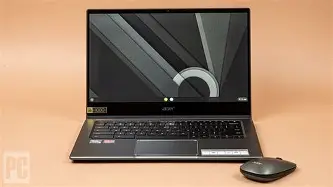
The Spin 514 presents itself as more substantial than cheap plastic Chromebooks. The chassis blends metal and reinforced plastics to keep weight reasonable while improving rigidity—useful when typing on the lap or converting to tablet mode. The 360-degree hinge is smooth and stable, allowing the device to hold tent and tablet positions without wobble in normal use.
Keyboard and trackpad quality are important for buyers who type long documents or do a lot of web-based productivity work. The Spin 514’s keyboard typically offers a shallow but responsive key travel with a tidy layout; a backlight is often available on higher trims, which helps in dim environments. The trackpad is responsive and supports ChromeOS gestures such as three-finger swipe and two-finger drag, which makes window and tab management feel natural after a short adjustment period.
Port selection and practical layout
Chromebook users often need at least one USB-C port for power and data, together with a headphone jack and a full-size USB-A port for legacy peripherals. The Spin 514 covers those practical needs, and some configurations offer multiple USB-C ports so the reviewer could plug in a monitor adapter and a charger without swapping accessories constantly. For frequent travelers, a sturdy USB-C charging brick that doubles as a power bank charger is a pragmatic accessory to pair with this device.
Display and pen input
Touchscreens and stylus support are defining features of many convertible Chromebooks. The Spin 514’s touchscreen is adequately bright for indoor and moderate outdoor use, with color and contrast that are good enough for photo review, streaming, and note-taking. While it doesn’t compete with premium OLED laptop displays, the panel is well-suited to ChromeOS’s interface and Android apps.
For note-taking and quick annotations, USI-compatible pen support (when included or supported) turns the Chromebook into a useful tool for students or professionals who sketch diagrams or mark up PDFs. The pen experience is serviceable for handwriting and drawing in apps like Google Keep, Squid, or Android creative apps; artists who require pressure-sensitive, professional-level stylus features may still prefer dedicated tablets or higher-end touch laptops.
Performance in everyday tasks
Chromebooks are built around the browser, and the Spin 514 is no exception: it excels when the workload stays inside Chrome tabs, web-based productivity suites (Google Workspace, Microsoft 365 web apps), and Android apps. The device handles dozens of tabs and multiple web apps running concurrently better than entry-level Chromebooks when equipped with 8GB of RAM or more. That level of memory is recommended for users who keep many tabs open, run web-based IDEs, or use Linux containers for development workflows.
Find top-rated Laptops & Computers products at great prices.
See Deals →Linux (Crostini) support on ChromeOS expands the Spin 514’s usefulness for developers: lightweight code editors, terminal utilities, and some compiled tools run well. The reviewer found building small projects, using VS Code in the Linux container, and running local development servers to be practical for day-to-day development tasks. More intensive compilation jobs or heavy containers push the limits; for those workloads, a clamshell laptop with a more powerful CPU and a dedicated cooling solution may be necessary.
Multimedia playback and streaming are comfortable on the Spin 514. Video calls on Google Meet and Zoom are reliable, with sufficient webcam and microphone quality for most meetings. The device can handle light photo editing in browser-based tools and Android apps, but professionals who edit large RAW files or perform color-critical work should look at higher-tier machines.
Battery life and mobility
Battery life is one of the strongest selling points of Chromebooks and the Spin 514 delivers predictable all-day use for typical productivity workflows: several hours of continuous browser use, document editing, and video streaming with conservative screen brightness. For mixed use (video calls, some streaming, and lots of tabs), the device comfortably carries through a half-day to a full day—depending on configuration and brightness.
Fast charging via USB-C is a practical benefit for users who travel or move between meetings. Carrying a small USB-C charger extends the device’s flexibility and, with multiple USB-C ports, a user can charge while connected to an external monitor or accessory. The reviewer emphasizes that actual battery life varies with workload—developer-heavy tasks and virtual machines reduce run time significantly compared to purely web-based work.
Durability, repairs, and long-term ownership
Chromebooks are often chosen for longevity in educational environments because ChromeOS receives regular updates and security patches. The reviewer notes that the Spin 514’s materials and hinge suggest solid day-to-day durability. Like most modern ultramobiles, it is not intended to be user-serviceable, so buyers who expect to keep a machine for many years should consider extended warranty or accidental damage protection, especially if the device is used on the road or by students.
Real-world use cases
- Students: Lightweight, fast for web research, and easy to manage with school accounts. The convertible design and stylus support make it useful for handwritten notes during lectures.
- Remote workers: Great for email, video conferencing, and cloud-based collaboration. The long battery life and fast wake-from-sleep help productive days on the go.
- Digital nomads and travelers: Durable enough for travel, with a balanced combination of ports and battery life. A compact charger and a USB-C dock or adapter turn it into a travel workstation.
- Casual creatives: Good for mood-boarding, light image edits, and Android drawing apps; not a replacement for professional creative suites on macOS or Windows.
- Developers (light): Ideal for quick edits, terminal tasks, and testing web apps locally via the Linux container. Heavy builds or large Docker images may be constrained by CPU and RAM limits on mainstream Chromebook configurations.
Pros & Cons
- Pros
- Solid build quality for the price bracket; convertible hinge adds versatility.
- Reliable ChromeOS experience with seamless integration of web, Android, and Linux apps.
- Good battery life for typical web-centric workflows and travel.
- Practical port selection (USB-C, USB-A, headphone jack) for daily use.
- Comfortable keyboard and responsive trackpad for extended typing sessions.
- Cons
- Not designed for heavy local compute tasks—limited for serious video editing or large compilations.
- Screen is fine for productivity but not class-leading for color-critical creative work.
- Internal storage can be limited depending on the configuration; cloud reliance remains a constraint for some buyers.
- Some higher-value features such as a top-tier stylus experience or premium display are not included in every configuration.
How the Spin 514 compares to other convertible Chromebooks
| Aspect | Acer Chromebook Plus Spin 514 | Lenovo Flex 5 Chromebook | HP Chromebook x360 14 |
|---|---|---|---|
| Build & hinge | Sturdy metal-reinforced chassis and smooth 360° hinge suitable for frequent mode changes. | Practical and well-balanced for price; hinge competent but sometimes lighter-feeling. | Premium-feeling hinge and chassis in higher trims; some models target business users. |
| Display | Good everyday touchscreen with accurate enough colors for streaming and documents. | Good value panel; may have slightly thicker bezels in some revisions. | Often offers higher-resolution or brighter panels in premium configs. |
| Performance for web apps | Responsive for many tabs and web apps when equipped with 8GB RAM or more. | Similar web performance; balanced for students and researchers. | Comparable; choose higher RAM for heavy multitasking or Linux use. |
| Battery life | All-day potential with conservative use; predictable for travel. | Good battery life for typical school/workdays. | Good to excellent battery life in efficient configurations. |
| Ports & connectivity | Practical mix including USB-C (often multiple), USB-A, and headphone jack. | Typically similar; may include microSD slot on some models. | Often feature-rich, with some business-focused options for more security ports. |
| Ideal for | Users who want a durable convertible with reliable ChromeOS performance and a focus on mobility. | Students and budget-conscious buyers seeking convertible convenience. | Users who want a blend of premium features with ChromeOS, sometimes for business use. |
Buying guide: what to choose and what to prioritize
When evaluating a Chromebook purchase—particularly the Acer Chromebook Plus Spin 514—buyers should prioritize based on how they actually work.
1. RAM: aim for 8GB or more
ChromeOS is efficient but modern web workflows are RAM-hungry. For users who keep many tabs, run web-based IDEs, or use Linux containers, 8GB should be the baseline. If the configuration offers 16GB and the budget permits, that will future-proof the device for longer multitasking windows.
2. Storage: SSD over eMMC where possible
Local storage on Chromebooks is typically modest because they emphasize cloud storage. Still, choosing an SSD or a higher-capacity option (128GB or 256GB) reduces friction when downloading files, working offline, or keeping a local Linux environment.
Shop the latest Laptops & Computers picks on Amazon.
Shop Amazon →3. Display and pen support
Decide if stylus input matters. If note-taking or light sketching is frequent, confirm USI pen compatibility and whether a pen is included. Screen brightness and resolution matter for outdoor work and media consumption—higher brightness and higher resolution improve usability and comfort.
4. Ports and expansion
Multiple USB-C ports make it easier to use docks, external displays, and chargers. If the user plans to connect legacy USB accessories, ensure there is a USB-A port or budget for a small adapter.
5. Warranty and accidental damage protection
Students and travelers should consider an extended warranty that covers drops or spills. The cost of a repair or replacement can outweigh the initial savings, especially for devices that see daily transport.
6. Software expectations
Chromebooks excel with web apps and Android apps. If the buyer relies on specific Windows-only desktop software, they should verify web-based alternatives or test the Linux compatibility layer. For most document, email, conferencing, and light creative tasks, ChromeOS now offers mature solutions.
Setup tips and practical workflows
- Enable Linux only when needed: Turn on the Linux container for command-line tools and lightweight development; allocate resources conservatively to avoid draining battery.
- Use Progressive Web Apps (PWAs): Install frequently used web apps as PWAs for quick access and an app-like windowed experience.
- Rely on cloud sync: Use Google Drive (or another cloud provider) for large files to reduce local storage pressure and keep backups automatic.
- Adjust power settings: Use adaptive brightness and battery saver during travel; ChromeOS’s power settings can extend runtime significantly.
- Calibrate pen/pen shortcuts: If using a stylus, set familiar app shortcuts and test palm rejection to improve note-taking comfort.
Conclusion
Switching to the Acer Chromebook Plus Spin 514 yielded a streamlined, dependable computing experience for the reviewer’s everyday workflows. The device’s convertible design, solid build, and ChromeOS’s simplicity make it an attractive choice for students, road warriors, and productivity-focused users who rely primarily on web and Android apps. While it is not aimed at heavy local compute workloads or professionals who need color-accurate displays and high-end creative tools, it covers a broad range of real-world needs with good battery life and a comfortable typing experience.
For buyers who value portability, a flexible hinge, and a straightforward operating system that keeps updates and security maintenance low-friction, the Spin 514 is worth considering. Choosing the right RAM and storage configuration is the key to a long-term, frustration-free experience. Ultimately, the switch to this Chromebook was less about a single dramatic improvement and more about a quieter rebalancing of priorities: favoring mobility, simplicity, and reliability over raw local performance.