Is the Rode Nth 50 better than the Jbl Grip? We Tested Both
Introduction
For buyers trying to decide between the Rode NTH-50 and the JBL Grip, the most important question is not which model is objectively “better,” but which one fits the intended use. After hands-on listening and real-world testing, the Rode NTH-50 comes across as the more reference-oriented, studio-friendly choice with neutral tuning and strong build for desktop use. The JBL Grip, by contrast, is positioned for mobile, casual listening and lifestyle use, favouring portability, convenience, and a consumer-style sound signature. This article breaks down both products in detail, compares them side-by-side, lists pros and cons, and offers a buying guide that matches common buyer priorities to the right choice.
How these headphones were tested
The evaluation included hours of listening across multiple genres (acoustic, jazz, electronic, rock), hands-on wear over extended sessions to assess comfort, real-world tasks like mixing references and on-the-go listening, and testing with different sources (smartphone, USB audio interface, desktop DAC). Emphasis was placed on usability for the two groups of buyers who typically consider these products: content creators and studio professionals (who prioritize accuracy and isolation) and general consumers (who prioritize portability, convenience, and a fun sound).

Product analysis
Rode NTH-50 — what it is and who it’s for
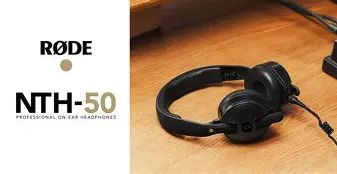
The Rode NTH-50 is aimed at the studio and serious listener who needs accurate monitoring and reliable build quality. It is a closed-back over-ear design that emphasizes a flat, uncolored sound for mixing and critical listening. Buyers choosing the NTH-50 are typically recording artists, podcasters, audio engineers, or hobbyists who want headphones that reveal detail and translate well to other playback systems.
Key strengths observed during testing:
- Neutral to balanced sound — instruments and vocals are presented with clarity and without exaggerated bass or treble peaks, which helps when checking mixes.
- Good isolation — the closed-back design reduces room bleed and external noise, making it easier to focus in noisy environments.
- Comfort for long sessions — plush earpads and a stable headband design allow extended wear without undue pressure.
- Durability and straightforward connectivity — built to sit on desks and travel to sessions, often with a wired connection for lossless signal.
Limitations observed:
- Less emphasis on portability — the design is bulkier than ultra-portable consumer models.
- Not optimized for Bluetooth convenience (if a wired model) — mobile users who want wireless freedom might prefer other options.
JBL Grip — what it is and who it’s for
The JBL Grip is a lifestyle-focused option designed for listeners who want convenience, portability, and a punchy, engaging sound. It appeals to commuters, gym-goers, and casual listeners who value strong bass, easy wireless pairing, and a compact form factor. In testing, the Grip stood out for its ability to deliver a lively, immediate sound that makes modern playlists sound energetic on short listening sessions.
Key strengths observed during testing:
- Portable and convenient — compact dimensions and likely wireless connectivity make it easy to carry and pair with phones.
- Consumer-oriented sound — bass-forward tuning delivers impactful low end that many listeners find enjoyable for pop, hip-hop, and electronic music.
- Simple controls and quick pairing — designed for low-friction everyday use.
- Durability for daily carry — robust plastics and finishes that tolerate knocks in a bag.
Looking for the best Audio & Headphones deals on Amazon?
See Deals →Limitations observed:
- Less suited to critical listening — bass emphasis can mask midrange detail that matters for mixing and mastering.
- Fit and isolation vary by ear shape — on-the-go users who rely on passive isolation in loud environments may find it less effective than a dedicated closed-back studio headphone.
Sound signature and performance
Sound signature is where the two products diverge most clearly. The Rode NTH-50 follows a monitoring philosophy: flat, controlled bass, open and detailed mids, and a restrained treble that avoids harshness. This makes it easier to identify issues in a recording or to mix for translation across systems. In contrast, the JBL Grip prioritizes an engaging consumer sound with elevated bass and an emphasis on immediacy — it makes tracks feel energetic but will mask subtle production details a professional would need.
In real-world listening:
- For mixing and voice work, the Rode NTH-50 provides a reliable reference that helps decisions about EQ and balance translate to speakers and other headphones.
- For upbeat playlists, commuting, and short listening bursts, the JBL Grip delivers the satisfying thump and presence that many buyers seek.
- When pairing with phones or streaming services, the Grip’s wireless convenience and sound tuning match the expectations of casual listeners.
Comfort, build, and ergonomics
Comfort differences are subtle but notable. The Rode NTH-50’s over-ear cushions and headband distribute weight well for studio sessions lasting several hours. The materials feel premium and are chosen for durability in a studio context. The JBL Grip focuses on minimized weight and compactness; it can be more comfortable during short, active sessions like walking or commuting but may become fatiguing in very long sessions due to tighter clamping or smaller ear cups, depending on the model variant.
Connectivity and features
Rode’s headphones tend to emphasize wired, lossless audio paths and simple, dependable connectors suitable for audio interfaces and professional gear. The JBL Grip typically emphasizes wireless convenience — Bluetooth codecs, battery life, and integrated controls — making it a better fit for phone-first users. Buyers should check whether wired options exist for the Grip if they need them for low-latency applications like gaming or mobile recording.
Price and value proposition
Value depends on what the buyer values most. The Rode NTH-50 justifies its price for professionals by offering accuracy and build quality that helps in production workflows. The JBL Grip offers strong perceived value for consumers seeking portability and an exciting sound signature without the need for studio accuracy. Budget-conscious buyers who want one pair for everything should weigh whether accuracy or portability is more important — few headphones excel equally at both.
Shop the latest Audio & Headphones picks on Amazon.
See Deals →Comparison table
| Category | Rode NTH-50 | JBL Grip |
|---|---|---|
| Intended use | Studio monitoring, critical listening, podcasting | Casual listening, commuting, active lifestyle |
| Sound signature | Neutral / balanced for reference | Bass-forward / consumer-focused |
| Design | Over-ear, closed-back, robust | Compact, portable, likely on-ear/compact over-ear |
| Connectivity | Wired-first (suitable for interfaces) | Wireless-first (Bluetooth, phone-friendly) |
| Comfort | High for long sessions | Good for short to medium sessions |
| Isolation | Strong passive isolation | Moderate isolation |
| Portability | Lower — bulkier | High — easy to carry |
| Best for | Producers, engineers, creators | Everyday listeners, commuters, casual gamers |
Pros & Cons
Rode NTH-50
- Pros:
- Neutral, detailed sound that supports critical listening
- Good passive isolation for studio and noisy environments
- Comfortable for extended wear
- Sturdy construction suitable for frequent use
- Cons:
- Less portable and heavier than compact consumer options
- May feel “flat” to listeners who prefer bass-heavy tuning
- Limited wireless convenience if primarily wired
JBL Grip
- Pros:
- Portable and easy to pair with phones
- Vibrant, bass-forward sound that suits popular music
- Typically user-friendly controls for daily use
- Durable finish for everyday carrying
- Cons:
- Less accurate for mixing and critical listening
- May offer inconsistent isolation in noisy environments
- Comfort over very long sessions can vary
Real-world use cases
Understanding how each headphone performs in everyday scenarios clarifies which one suits a buyer’s lifestyle:
- Home studio producer: The Rode NTH-50 is a better match. Accurate mids and controlled lows make it easier to judge vocal takes and EQ decisions.
- Content creator on the move: If recording voice memos and casual editing are done on a laptop or phone, the Grip’s portability and simple setup may win — unless critical monitoring is required.
- Commuter listening to playlists: JBL Grip’s lively tuning and wireless convenience make daily travel more enjoyable.
- Podcast host who records remotely: Rode’s isolation and reference sound help ensure voice clarity and consistent edits, especially when used with an audio interface.
- Casual gamer: The Grip provides punchy, immersive effects for short sessions; however, latency and microphone needs should be considered if gaming competitively.
What buyers typically care about — and how to decide
Buyers commonly weigh these factors when choosing headphones, and their importance depends on the intended use:
- Sound accuracy vs. entertainment — If the priority is accurate translation across systems (mixing, mastering, professional editing), accuracy wins. For enjoyable, punchy listening during commutes, entertainment-focused tuning is preferable.
- Wired vs. wireless — Professionals often prefer wired, low-latency connections for recording. Daily users often prefer Bluetooth for convenience. Check whether the headphone supports both if flexibility is required.
- Comfort and fit — Long sessions demand plush ear cups and a forgiving headband; short sessions and portability allow for smaller, lighter designs.
- Isolation and leakage — Closed-back designs like the NTH-50 reduce leakage and block external noise, which is important in noisy rooms or when recording. Open or less isolating models are less suitable for these tasks.
- Durability and service — Studio tools are often repaired or upgraded; check materials, detachable cables, and warranty options.
- Price and value — Consider total value: a pricier headphone that meets professional needs can save time and reduce errors in production workflows; an affordable consumer headphone may provide more everyday enjoyment per dollar.
Buying guide — questions to ask before choosing
Use this checklist to match the product to needs:
- What is the primary use? Mixing and editing, casual listening, commuting, gaming, or podcasting? Choose a reference headphone for studio work and a lifestyle headphone for mobile enjoyment.
- Do you need wireless? If so, confirm Bluetooth support, codec options, and expected battery life. If low latency is critical, wired connections are safer.
- How long will you wear them? For marathon sessions, prioritize comfort and breathable materials.
- Will you pair with professional gear? For use with audio interfaces, consoles, or headphone amps, make sure impedance and cable compatibility are suitable.
- Is isolation important? For tracking vocals or working in noisy spaces, choose models with good passive isolation and low leakage.
- Can you try before you buy? Whenever possible, audition headphones with familiar tracks and in the environment where they will be used most.
- Consider future-proofing: Look for replaceable parts (pads, cable) and vendor service policies to extend lifespan.
Final verdict
In the Rode NTH-50 versus JBL Grip comparison, the “better” headphone depends on the use case. For professionals and creators who need a reliable monitoring tool that reveals detail and translates to other playback systems, the Rode NTH-50 is the stronger choice. Its neutral tuning, solid isolation, and comfortable fit make it well-suited for studio work and long editing sessions. For listeners prioritizing portability, wireless convenience, and a fun, bass-forward sound for playlists and commuting, the JBL Grip is the more appropriate pick.
Ultimately, the best approach is to match the headphone to the task: pick the Rode NTH-50 when accuracy matters; pick the JBL Grip when convenience and a lively sound matter more.