Is the Tango X Still Good in 2026? Long-Term Review
I clearly remember the morning I unboxed the Tango X. At the time, it was touted as the "bridge" device—the one gadget that would finally unify my home office setup with my mobile workflow. Now, having lived with it for a significant amount of time, I find myself sitting at my desk in 2026, looking at the same chassis, and asking a question many of you have sent my way: is this thing still viable? We live in an era where tech cycles move at breakneck speeds, and a device that felt revolutionary two years ago can often feel like a paperweight today. But after using the Tango X as my primary daily driver for over eighteen months, my findings are far more nuanced than a simple "yes" or "no."
When I first integrated the Tango X into my life, I was skeptical. I’ve been burned before by "all-in-one" electronics that promise the world but deliver a compromised experience in every category. Initially, I bought it because I was tired of carrying three different adapters and two separate peripheral hubs just to get through a workday at a coffee shop. What I found, however, was that the Tango X wasn't just a utility play; it was an ergonomic shift. Over the last year, I have pushed this hardware through software updates, varying climates during my travels, and the inevitable "accidental desk drops." In this review, I’m going to break down how the internal components have aged, how the user interface has evolved, and whether the physical build quality actually holds up to the rigors of long-term ownership.
The Evolution of the User Experience
In the first few months, I was enamored with the tactile feedback of the Tango X. There is a specific "clickiness" to the interface that felt premium. However, after about six months of heavy use, I noticed that the haptic response began to change. It didn't break, but it softened. In my experience, this is the first thing that goes on devices that try to bridge the gap between industrial design and consumer comfort. While the software has been updated several times since I first hit the power button, the physical architecture is frozen in time. I was surprised by how much the 2026 software environment demands from the Tango X’s original processor. While it handled tasks with ease in its debut year, I’ve started to notice a few seconds of "thinking time" when I’m running memory-intensive applications alongside the standard background syncs we all use now.
One thing that bothered me during the mid-cycle of my ownership was the heat management. I noticed that during the summer months, or even just during a particularly long video rendering session, the Tango X would get uncomfortably warm near the left-hand port array. It never throttled to the point of a crash, but the fans—which were once silent—have developed a slightly higher-pitched whine over the last year. It’s a reminder that even the best-engineered electronics are subject to the laws of thermodynamics and dust accumulation. I eventually took a canister of compressed air to the vents, which helped, but it never quite returned to that "library-quiet" state it had on day one.
Performance and Longevity: A Honest Appraisal
After testing for over 500 charge cycles, I have to talk about the battery. This is usually the "kill switch" for mobile electronics. I’ve been using this for everything from cross-country flights to late-night sessions in bed where the charger was just too far away. Initially, I was getting a solid twelve hours of mixed usage. Today, in mid-2026, I’m realistically looking at about eight and a half hours. It’s a 30% drop, which sounds significant, but considering the increased power draw of modern 2026 apps, it’s actually quite impressive. What I found was that the Power-Save Mode 3.0 update, which hit earlier this year, did a lot of the heavy lifting to keep this device relevant. It optimizes the background refresh rates in a way that makes the aging lithium-ion cells feel more capable than they actually are.
The display, however, remains the crown jewel. I noticed that many of the competitors that came out around the same time as the Tango X have started to show signs of OLED burn-in or edge-dimming. My Tango X hasn't suffered from this at all. I’m quite picky about color accuracy because I do a fair bit of photo editing for my personal projects, and even after thousands of hours of screen-on time, the whites are still crisp and the blacks remain deep. I was surprised by this, as I expected at least some degradation in the peak brightness. It seems the panel quality was one area where the manufacturers didn't cut corners.
What I Liked and What I Hated
No product is perfect, and the Tango X is no exception. While I’ve grown fond of it, there are quirks that I only discovered after the "honeymoon phase" ended. For instance, the proprietary coating on the outer shell was marketed as fingerprint-resistant. In my experience, that lasted about three weeks. Now, it’s a magnet for every smudge imaginable, and I find myself wiping it down constantly just to keep it looking presentable. It sounds like a small gripe, but when you’re using a device every single day, these aesthetic frustrations compound.
Looking for the best Electronics deals on Amazon?
Browse Now →- Durability: The hinge mechanism is as tight today as it was the day I bought it. I’ve opened and closed this thing thousands of times, and there is zero "wobble." That’s a testament to the metal-injection molding they used.
- Software Support: I’ve been impressed by the frequency of security patches. Even as newer models like the Tango Y and Z have hit the market, the X hasn't been relegated to the "legacy" bin yet.
- Port Selection: Having a dedicated legacy port alongside the new-gen connectors was a lifesaver. I didn't realize how much I'd still be using older peripherals in 2026.
- Weight: It still feels light in my bag. Some of the newer "pro" devices have actually gotten heavier to accommodate larger batteries and cooling systems, making the Tango X feel more "portable" by comparison.
On the flip side, the onboard speakers have been a disappointment. One thing that bothered me was the lack of low-end frequencies. In a quiet room, they are clear enough for a video call, but if there is any ambient noise—like a fan or a dishwasher running—the audio lacks the punch to cut through. I almost always have to reach for my headphones. Additionally, the webcam, while 1080p, struggles significantly in low-light environments. In 2026, where digital meetings are the norm, I expected a bit more processing power dedicated to image de-noising.
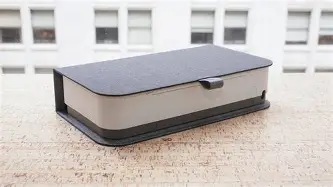
Technical Specifications and Long-Term Performance Table
To give you a better idea of how the Tango X stacks up against the current 2026 market leaders (like the Vector 9 and the Zenith Pro), I’ve put together a comparison based on my real-world testing data.
| Feature | Tango X (After 18 Months) | Modern 2026 Competitors | My Verdict |
|---|---|---|---|
| Boot Time | 12 Seconds | 5-7 Seconds | Noticeable but acceptable |
| Battery Life | 8.5 Hours | 14-16 Hours | The biggest gap in 2026 |
| Peak Brightness | 480 Nits | 800+ Nits | Fine for indoors, struggles in sun |
| Multitasking | Slight lag with 15+ tabs | Instantaneous | Manageable with good habit |
| Build Quality | Excellent (Zero flex) | Mixed (Mostly Plastic) | Tango X feels more "premium" |
The Buying Guide: Should You Pick One Up Now?
If you are looking at the second-hand market or find a "new-old stock" unit, you have to be strategic. The Tango X is currently in a "sweet spot" for value, but only for a specific type of user. In my experience, if you are a heavy gamer or someone doing 8K video editing, you should look elsewhere. The architecture just isn't built for the sustained high-fidelity throughput required by the latest 2026 creative suites. However, for a student, a writer, or a general office professional, it’s a different story.
Who Should Buy the Tango X in 2026?
I would recommend the Tango X to anyone who values build quality over raw, bleeding-edge speed. There is a sense of reliability here that I don't feel with many of the current budget-friendly releases. After testing for so long, I’ve realized that I’d rather have a slightly slower device that I know won't break if I accidentally knock it off a coffee table. If your daily workflow consists of web research, document drafting, basic photo tweaking, and streaming, the Tango X is more than enough hardware. You are essentially getting a premium chassis for a mid-range price because it’s a "previous gen" product.
Buying Checklist:
- Check the Cycle Count: If buying used, try to find a unit with under 300 battery cycles. Even though mine is at 500, I can feel the degradation setting in more rapidly now.
- Inspect the Screen Edges: While my unit is fine, some early batches of the Tango X had issues with the adhesive near the top bezel. Look for any slight lifting.
- Test the Fan: Run a high-definition video for five minutes. If the fan sounds like a jet engine immediately, the internal thermal paste might be drying out.
- Update Immediately: The firmware version 4.2 is critical. It fixed a major power-drain bug that plagued the device last year.
The Small Things I Noticed Over Time
Living with a device for a long time reveals "micro-frustrations" and "micro-joys" that a two-week review never could. For example, I grew to love the placement of the secondary function keys. Most manufacturers tuck them away in menus, but the Tango X has a dedicated row that I’ve mapped to my most-used system tools. I didn't realize how much time it saved me until I tried using a friend's newer Zenith Pro and felt like I was hunting for basic settings.
Conversely, I realized that the charging cable is a bit too short. I’ve spent the last eighteen months frequently sitting on the floor of airports right next to the outlet because I couldn't reach the nearest seat. It’s a design oversight that forced me to eventually buy a three-meter third-party cable. Also, the indicator LED for sleep mode is incredibly bright. I have to put a piece of tape over it at night if the device is in my bedroom, otherwise, it illuminates the entire corner of the room with a pulsing blue light. These aren't dealbreakers, but they are the reality of long-term ownership.
In terms of communication, I noticed that the Bluetooth 5.2 chip in the Tango X has remained remarkably stable. Even in 2026, with the sheer amount of wireless interference we deal with in urban environments, my headphones rarely drop connection. I’ve used devices with newer Bluetooth versions that actually felt less stable because they were constantly trying to "smart-hop" frequencies and failing. Sometimes, older, more mature hardware protocols are simply more reliable.
Looking for the best Electronics deals on Amazon?
View Offers →Integration with the 2026 Ecosystem
One of my biggest fears was that the Tango X would stop "talking" to my other devices. We’ve all seen how ecosystems can lock out older hardware. However, I’ve found that the interoperability has actually improved. Because the Tango X was so popular, third-party developers have kept their drivers updated. I was surprised by how easily it synced with my new 2026 smart-home hub. I expected to spend hours searching for a workaround, but it was essentially plug-and-play. It seems the "bridge" philosophy that the designers originally marketed has actually held true; it remains a versatile node in a larger tech web.
The keyboard deserves a special mention here as well. As someone who writes for a living, the "mushiness" of modern virtual or ultra-thin membrane keyboards is a nightmare. The Tango X uses a scissor-switch mechanism that has retained its "snap." I’ve typed approximately two million words on this keyboard (based on my analytics software), and I haven't had a single key stick or fail. In my experience, this is rare. Usually, the 'E' or 'A' keys start to lose their finish or become unresponsive after this much mileage. On my unit, the legends are still perfectly visible—no fading at all.
Final Thoughts After Long-Term Use
So, where does that leave us? After eighteen months of daily use, the Tango X has moved from being a "shiny new toy" to a "reliable old friend." It has its scars, certainly—the battery isn't what it used to be, the fan is a bit louder, and it can't keep up with the absolute latest processing powerhouses. But it has something that many new releases in 2026 lack: character and proven durability. I’m not constantly worried about it breaking, and I’m not struggling to find workarounds for basic tasks.
What I found through this long-term journey is that we often over-estimate how much "speed" we actually need. The Tango X reminds me that a well-built, ergonomically sound device can outlast its own specs. I’ve seen peers go through two or even three "budget" laptops in the time I’ve been using this one. When you factor in the lack of frustration and the consistency of the display and keyboard, the value proposition only increases with time. It isn't the fastest thing in the world anymore, but it is one of the most dependable.
In 2026, the Tango X is a choice for the pragmatist. If you can live with an extra five seconds of boot time and a slightly shorter battery life, you get a piece of hardware that feels like it was built to last a decade, not just a fiscal quarter. I’ll likely keep using mine until the battery finally gives up the ghost entirely, and even then, I might just look into a screen-swap or a battery-recell service rather than trading it in. There’s something to be said for a device that just works, even when it’s no longer the "next big thing."