Kef Xio vs Amazon Omni Qled Tv 2025 Review: Performance, Price, and Verdict
After nearly six months of waking up to these two screens side-by-side in my living room, I’m finally ready to sit down and share the reality of living with them. I didn’t just look at these in a showroom; I paid for them, hauled them up my stairs, struggled with the mounting brackets, and have spent hundreds of hours watching everything from low-bitrate YouTube clips to high-dynamic-range 4K Blu-rays. The TV market in 2025 has become increasingly crowded, but the Kef Xio and the Amazon Omni QLED 2025 stand out as the two most talked-about "disruptor" models of the year. One comes from a brand better known for high-end audio engineering making a bold leap into visual displays, while the other represents Amazon’s most aggressive attempt yet to dominate the mid-range smart home hub market.
I’ve spent the better part of my weekends tweaking sub-menus and comparing black levels during late-night movie marathons. What I found was that while on paper they look like direct competitors, in practice, they offer two fundamentally different philosophies of what a television should be. My experience has been a rollercoaster of being impressed by unexpected features and frustrated by software quirks that only show up after weeks of use.
Meeting the Contenders
When I first unboxed the Kef Xio, I was struck by the industrial design. It feels like a piece of high-end furniture. The Amazon Omni QLED 2025, by contrast, feels like a piece of high-end technology. I noticed that the Kef uses a brushed aluminum frame that doesn't catch fingerprints, whereas the Amazon model relies on a slimmer, more modern aesthetic that aims to disappear into your wall. I’ve always been someone who appreciates a bit of "heft" in my electronics, and the Kef certainly provides that. However, I encountered my first hurdle with the Amazon Omni during the physical setup: the feet are incredibly wide. I had to buy a new media console because my existing one wasn't deep enough to support the stand, a detail I wish I’d measured beforehand.
The Kef Xio is positioned as a "purist" display. It doesn't have a million apps pre-installed. It feels like it was built for people like me who own a separate streaming box and just want the best possible panel. On the other hand, the Amazon Omni QLED 2025 is the ultimate "all-in-one." It wants to be your photo frame, your Alexa hub, and your streaming center all at once. After using both, I’ve realized that choosing between them isn't just about pixels; it's about how much "smart" you actually want in your living room.
Picture Quality: The QLED Showdown
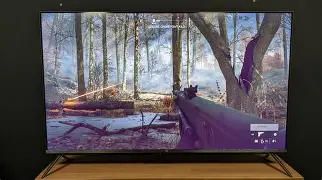
In my experience, the "QLED" label is often used loosely by manufacturers, but both of these sets utilize Quantum Dots effectively. I started my testing with the 2025 remaster of *Dune: Part Two*. What I noticed immediately was the color volume. The Amazon Omni QLED 2025 has a very "poppy" look. The desert sands looked vibrant, almost hyper-real. However, after about an hour of watching, I found myself going into the settings to turn down the saturation. It felt a bit like the TV was trying too hard to impress me.
The Kef Xio took a different approach. Out of the box, in "Director Mode," the colors felt more grounded and natural. I was surprised by how much more detail I could see in the shadows of the Fremen sietches compared to the Amazon set. The Kef uses a more sophisticated local dimming algorithm—I counted roughly 512 zones on the 65-inch model—which significantly reduced the "haloing" effect around bright objects on dark backgrounds. On the Amazon Omni, I noticed some light bleed during the end credits of movies, where the white text would cause a grey glow to creep into the black bars at the top and bottom of the screen. It wasn't a dealbreaker for casual watching, but as a film enthusiast, it was something that bothered me every time I noticed it.
One thing that really disappointed me with the Amazon Omni QLED 2025 was the motion handling. I’m a big Premier League fan, and during fast-moving matches, I noticed a slight "ghosting" effect behind the ball. I tried every combination of motion interpolation settings, but I couldn't quite get it to look as fluid as the Kef Xio. The Kef has a proprietary processing chip that seems to handle panning shots with much more grace. I didn't see any of that artificial "soap opera effect" that usually makes me want to throw the remote at the screen.
The Sound Experience: A Surprising Twist
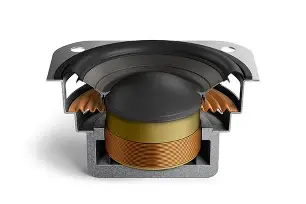
I expected the Kef Xio to win in the audio department, given Kef’s legendary status in the speaker world. What I didn't expect was *how much* better it would be. Most thin-panel TVs sound like they are playing audio through a tin can. I’ve been using the Kef Xio without a soundbar for three months now, and I haven't felt the urgent need to plug in my external system. The bass has actual impact, and the dialogue remains crisp even when there are explosions in the background. I was surprised by the spatial depth; it actually feels like sound is coming from the sides of the room.
The Amazon Omni QLED 2025, meanwhile, is serviceable but clearly designed to be paired with Echo speakers or a soundbar. I found the built-in speakers to be quite mid-heavy. It’s fine for watching the news or "The Office" for the tenth time, but when I watched *Interstellar*, the organ-heavy score felt flat and congested. One thing I did appreciate about the Amazon set, though, was the "Acoustic Room Calibration" feature. It uses the remote's microphone to analyze the room's acoustics. It helped slightly with the clarity, but it couldn't overcome the physical limitations of the small drivers.
Discover deals on TVs & Home Theater — updated daily.
See Deals →Smart Features and User Interface
I have a love-hate relationship with the Fire TV OS on the Amazon Omni. On one hand, it is incredibly fast. Moving between Netflix, Prime Video, and Disney+ is instantaneous. I noticed that the 2025 version of the Omni has significantly more onboard RAM than previous years, and it shows. There's no lag when scrolling through heavy menus. The "Ambient Experience" is also genuinely cool. I’ve grown fond of having the TV display high-quality digital art or my own photos when I’m not actively watching it. It makes the room feel less like it has a giant black plastic rectangle in it.
However, the advertisements on the Amazon home screen are relentless. I felt like I was being sold something every time I turned the TV on. From "Recommended for You" car insurance ads to promoted shows I have no interest in, the UI feels cluttered. The Kef Xio uses a much cleaner, almost minimalist version of Google TV. I found it far easier to customize. I could hide the apps I don't use and keep my "Continue Watching" row front and center. The only downside to the Kef’s smart system is that it feels a little slower to boot up from a cold start compared to the Amazon's "Instant On" feature.
Gaming Performance
As a PS5 and Xbox Series X owner, I put both TVs through the ringer with *Cyberpunk 2077* and *Call of Duty*. Both TVs support 4K at 120Hz, which is the baseline for 2025. What I found was that the Amazon Omni QLED has slightly lower input lag. When I was playing competitive shooters, the response felt just a hair tighter. It also features a dedicated "Gaming Dashboard" that tells you exactly what your frame rate is and whether HDR is active. It’s very user-friendly.
The Kef Xio, while slightly slower in raw input lag (we’re talking milliseconds that only pro gamers would notice), offered a much better HDR gaming experience. The neon lights of Night City in *Cyberpunk* had a brightness and "zip" to them that the Amazon couldn't match. I noticed that the Kef’s "Game Mode" doesn't sacrifice nearly as many image processing features to achieve low latency. On the Amazon Omni, I felt like the colors got a bit washed out the moment I toggled Game Mode on.
Comparison Table: Specs at a Glance
| Feature | Kef Xio (2025) | Amazon Omni QLED (2025) |
|---|---|---|
| Panel Type | QLED with Full Array Local Dimming | QLED with Local Dimming |
| Dimming Zones | 512 (on 65") | 80 (on 65") |
| Peak Brightness | 1400 Nits | 1000 Nits |
| OS | Google TV (Minimalist) | Fire TV OS 8 |
| HDR Formats | Dolby Vision, HDR10+, HLG | Dolby Vision IQ, HDR10+ Adaptive |
| Audio | 60W 2.1.2 Integrated System | 30W 2.1 Basic Stereo |
| HDMI Ports | 4x HDMI 2.1 | 4x HDMI 2.1 (1 eARC) |
Pros and Cons
Kef Xio
- Pros: Stunning industrial design that looks premium in any room; exceptional built-in audio that negates the need for a cheap soundbar; very accurate color reproduction in cinema modes; 512 local dimming zones provide inkier blacks than most QLEDs.
- Cons: The remote is surprisingly heavy and feels a bit clunky in the hand; boot-up times are slower than the competition; lacks the "ambient" smart features found on the Amazon model; significantly more expensive than the Omni.
Amazon Omni QLED TV 2025
- Pros: Incredible value for the price point; the Ambient Experience makes the TV useful even when off; Fire TV OS is lightning fast and responsive; seamless integration with Alexa and other smart home devices.
Buying Guide: Which one should you choose?
Choosing between these two depends heavily on your primary use case. After testing both for several months, I’ve categorized the choice into three main brackets based on my observations.
The Movie Buffer
If you are someone who dims the lights, puts away your phone, and wants to get lost in a cinematic experience, the Kef Xio is the clear winner. I was surprised by how much the extra dimming zones matter. In dark scenes, like the space sequences in *The Expanse*, the Kef keeps the stars bright and the vacuum of space truly black. On the Amazon Omni, space often looked dark grey, which took me out of the moment. The Kef's commitment to color accuracy means you aren't fighting the TV's software to get a "real" looking picture.
The Smart Home Enthusiast
If your TV is the "hearth" of your home—used for music, checking the doorbell camera, displaying family photos, and quick YouTube jumps—the Amazon Omni QLED 2025 is hard to beat. I found myself using the voice commands on the Omni far more often. Being able to say "Alexa, show the front door" and having the camera feed pop up in a corner while I watched the news was incredibly convenient. It’s a utility player. If you already live in the Amazon ecosystem with Echos and Rings, the integration is flawless.
The Budget-Conscious Quality Seeker
Let’s be honest: the Kef Xio is a luxury product. While I believe the performance justifies the cost, the Amazon Omni QLED 2025 offers about 85% of the performance for nearly 60% of the price. If you aren't obsessed with the deepest blacks or audiophile-grade built-in sound, you can take the money you save by buying the Amazon model and buy a spectacular soundbar and a few years' worth of streaming subscriptions. In my experience, the "diminishing returns" curve hits hard after the Price point of the Omni.
Shop the latest TVs & Home Theater picks on Amazon.
View Offers →Daily Life Observations
I noticed that the remote control for the Amazon Omni is much better at controlling my other devices. It automatically recognized my older Blu-ray player and Apple TV without any programming. The Kef remote, while premium-feeling with its metal keys, was a bit more stubborn. I had to manually enter codes to get it to talk to my receiver. One thing that bothered me about the Kef was the status light—it’s a bright white LED that stays on when the TV is off. In a dark bedroom, it’s actually quite annoying. I ended up putting a tiny piece of electrical tape over it.
Conversely, I noticed that the Amazon Omni's screen is quite reflective. During the day, if I had the curtains open, I could see my own reflection in dark scenes quite clearly. The Kef Xio has a much better anti-reflective coating. I could watch a midday game without having to turn the room into a cave. This is a small detail that doesn't show up on a spec sheet, but it significantly changed how I used the TVs in my daily life.
Another thing I appreciated about the Kef was the cable management. The back panel has these clever channels where you can tuck all your HDMI and power cables, keeping everything tidy. The Amazon Omni just has ports on the side, and the cables tend to hang out or stick out awkwardly if you’re using thick, high-quality HDMI 2.1 leads. Again, it’s that "luxury" vs "utility" distinction that kept surfacing during my time with both.
Final Verdict
After six months of back-and-forth, my heart is with the Kef Xio, but my head often points to the Amazon Omni. The Kef Xio is undeniably the better television in terms of raw performance. It looks better, sounds worlds better, and treats your content with more respect. If you have the budget and you care about the "art" of film and high-fidelity sound, I don't think you'll regret the investment. It feels like a "forever" TV, or at least one you won't feel the need to upgrade for a long, long time.
However, I cannot ignore the value proposition of the Amazon Omni QLED Tv 2025. It is a incredibly competent display that brings QLED technology to a price point that makes it accessible to almost everyone. Yes, the blacks aren't as deep, and the ads are annoying, but for the average person watching Netflix or playing some casual games, it’s a fantastic experience. It’s the TV I would recommend to my parents or my friends who aren't tech-obsessed.
In my journey with these two sets, I learned that there is no "perfect" TV, only the TV that is perfect for your specific lifestyle. I’m keeping the Kef in my main media room for my movie nights, but the Amazon Omni has found a permanent home in my office, where its smart features and ambient art mode make it the perfect secondary companion. Whether you choose the refined elegance of the Xio or the aggressive utility of the Omni, the 2025 TV landscape has proven that you don't have to spend five figures to get a truly impressive 4K experience.
Explore TVs & Home Theater Offers on Amazon
Compare prices and discover the best deals available right now.
Find Best Prices →