Spec Battle: Acer Aspire 16 Ai vs Meta Ray Ban Display — Is It Worth Upgrading?
Introduction
When evaluating technology upgrades, buyers often face an odd but increasingly common dilemma: upgrade a traditional workstation-class device or adopt a wearable display that promises new interaction models. The Acer Aspire 16 Ai and the Meta Ray‑Ban display represent two different directions. One is a mainstream laptop designed to meet broad productivity and multimedia needs with AI-enhanced features; the other is a wearable display embedded in familiar eyewear that rethinks how information surfaces in day-to-day life.
This article compares both products not as direct replacements — they address different problems — but as alternative investments for people deciding where to allocate upgrade budget and attention. It examines capabilities, real-world use cases, and trade-offs buyers typically care about: performance, portability, battery life, display quality, input and interaction, privacy, and overall value. The goal is to help readers decide whether the upgrade path they consider aligns with how they actually work and live.
Product overviews
Acer Aspire 16 Ai — what it is and who it targets
The Acer Aspire 16 Ai is positioned as a large-screen ultraportable that blends everyday productivity with enhanced multimedia and on-device AI features. In the Aspire line, models branded with "Ai" emphasize hardware and software optimizations meant to make common tasks — content creation, video conferencing, and multitasking — feel faster and smarter.
For a buyer prioritizing spreadsheets, light photo editing, long-form writing, streaming, and occasional gaming, the Aspire 16 Ai aims to be a single-device solution. Its 16-inch footprint balances screen real estate with reasonable mobility, and vendor software often includes AI-assisted features such as smart noise reduction in meetings, transcription or content-summarization tools, and optimized thermal performance that attempts to keep the chassis thin without sacrificing sustained performance.
Meta Ray‑Ban Display — what it is and who it targets
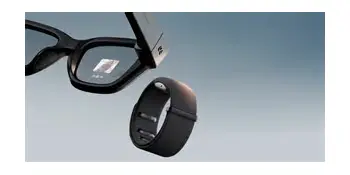
The Meta Ray‑Ban display is part of a continuing evolution of smart eyewear. Rather than a full computing platform, it acts as a wearable heads‑up display (HUD) integrated into Ray‑Ban frames, intended to surface contextually relevant information — notifications, simple navigation cues, camera capture, and quick content overlays — without requiring a handheld device.
This product appeals to buyers who prioritize hands‑free access to bite‑sized information while commuting, exercising, or performing tasks where looking at a screen is inconvenient. It targets a lifestyle use case: stay connected with minimal friction, capture spontaneous moments, and maintain situational awareness while receiving discreet digital cues.
Detailed product analysis
Design and portability
Acer’s 16-inch form factor is deliberately larger than ultrabooks; it emphasizes visual workspace and thermal headroom. The chassis typically weighs more than a 13–14-inch ultraportable and is thicker to accommodate larger batteries and cooling solutions. Though not a heavy desktop replacement, it trades some portability for comfort in multi‑window workflows.
The Meta Ray‑Ban display is designed to be indistinguishable from conventional eyewear at a glance. The weight is concentrated on the frame and temple stems; the goal is all‑day wearability. For commuters or field workers who move a lot during the day, a wearable has a clear advantage in hands‑free portability and glanceable interactions.
Display and interaction model
The Aspire 16 Ai’s 16‑inch panel is a central selling point: larger text, wider timelines in editing software, and more room for side‑by‑side apps. The laptop’s display quality (color accuracy, brightness, and refresh rate) is important for creators and media consumers; buyers should compare panel options per configuration.
The Meta Ray‑Ban display uses a micro‑optical projection or waveguide system to overlay small bits of information into the wearer’s field of view. The display surface is intentionally minimal — not suitable for dense documents or long-form content — but excellent for contextually relevant cues and short interactions. Input is commonly via touch on the temple, voice commands, or gestures; this interaction model favors quick, ephemeral tasks.
Find top-rated Laptops & Computers products at great prices.
View Offers →Performance and compute
Acer laptops in this class typically offer mainstream laptop processors and optional discrete graphics. This makes them capable for productivity software, light creative workloads, and some gaming. "Ai" branding usually signals additional on-device AI acceleration or optimized software that leverages the CPU/GPU/Neural Processing Unit (NPU) for tasks like background removal, real‑time transcription, or upscaling.
The Meta Ray‑Ban display is not a general-purpose computer. It offloads heavy computation to a paired smartphone or the cloud for tasks like processing captured images or running advanced AR features. Buyers should expect constrained local compute, optimized for latency‑sensitive sensor processing and low‑power operation.
Battery life and charging
Battery life on a 16‑inch laptop is a balance: larger batteries are possible, but bigger screens and more powerful components increase consumption. Real-world endurance depends on workload — streaming video and video conferencing drain faster than web browsing or document editing. Fast charging and power profiles can mitigate shortfalls, but the laptop will still need periodic outlet access in a full workday with heavy use.
Wearable displays prioritize short, intermittent displays rather than long video playback. Batteries are small, so the device typically provides a full day of casual, glanceable use but may require daily charging under heavy use (continuous navigation or frequent camera capture). Charging cases or small USB charging might be part of the accessory ecosystem.
Connectivity and ecosystem
The Aspire 16 Ai offers standard laptop connectivity: USB‑C with data and power delivery, USB‑A, HDMI or DisplayPort options on some configs, Wi‑Fi 6/6E, and Bluetooth. Its utility as a productivity hub is enhanced by full OS compatibility with desktop software, peripherals, and enterprise management tools.
The Meta Ray‑Ban display’s value is tightly coupled with the smartphone ecosystem. Seamless pairing, mobile OS app support, and permissions model determine how well notifications, maps, and camera functions work. Wearable limitations also extend to app breadth — most smartphone apps are not fully reworked for heads‑up interaction, so the experience is curated and lightweight.
Privacy, sensors, and safety
Laptops are generally private in that content is visible only to the user sitting at the screen, but cameras and microphones introduce privacy considerations in shared spaces. Built‑in hardware privacy shutters, physical mute switches, and clear indicator LEDs matter to buyers who attend many meetings.
Smart eyewear raises additional questions: wearer recording capability, visible indicators for bystanders, and the potential for distraction while walking or driving. Regulations and social norms around wearable cameras vary; buyers should weigh the social friction and legal context in their region before relying on a wearable for public capture.
Comparison table
| Category | Acer Aspire 16 Ai | Meta Ray‑Ban Display |
|---|---|---|
| Primary purpose | Productivity, multimedia, light creative work | Hands‑free notifications, contextual AR overlays, quick capture |
| Form factor | 16‑inch clamshell laptop | Eyewear with embedded heads‑up display |
| Performance | Full laptop CPUs/GPUs; suitable for sustained tasks | Limited local compute; relies on paired phone/cloud |
| Display | Large, high‑resolution panel for extended work | Micro display for short, glanceable information |
| Battery life | Hours to all‑day depending on use and config | Designed for intermittent use; daily charging typical |
| Input | Keyboard, trackpad, touch (if configured), external devices | Touch/temple controls, voice, gestures; minimal text input |
| Portability | Portable for laptop; less when compared to ultraportables | Significantly more portable and always wearable |
| Best for | Workers who need full apps, multitasking, content creation | Users needing glanceable access and hands‑free capture |
| Privacy considerations | Standard camera/mic concerns; OS controls available | Higher social scrutiny due to recording/visibility |
Pros & cons
Acer Aspire 16 Ai
- Pros: Large display suited for multitasking and content consumption; full desktop-class applications; configurable performance and storage; on-device AI features that can speed common workflows.
- Pros: Robust connectivity for peripherals, external displays, and docking; better suited for content creation and sustained workloads than smaller laptops.
- Pros: Familiar input methods (keyboard, trackpad) for long-form typing and precision tasks.
- Cons: Heavier and less pocketable than ultraportables; not ideal for all‑day mobile-only use.
- Cons: Larger screen and higher performance options can reduce battery life under heavy tasks.
- Cons: Software AI enhancements depend on manufacturer updates; longevity of software support may vary.
Meta Ray‑Ban Display
- Pros: True hands‑free interactions for notifications, navigation cues, and quick captures; wearable style blends into everyday life for discreet access.
- Pros: Encourages mobility and situational awareness; useful for field workers, riders, commuters, and outdoor enthusiasts.
- Pros: Lower attention cost for short, ephemeral tasks compared with pulling out a phone.
- Cons: Not a replacement for a full workstation; limited for content creation, complex tasks, or reading long documents.
- Cons: Battery and compute are constrained; many features require a paired smartphone.
- Cons: Privacy and social acceptance issues: people nearby may object to visible cameras or uncertain about recording status.
Buying guide — which should a buyer choose?
Deciding whether to upgrade to the Acer Aspire 16 Ai, add Meta Ray‑Ban display eyewear, or both depends primarily on workflows and priorities. The following checklist helps map needs to product strengths.

Assessing needs
- Workload intensity: If the daily work is dominated by spreadsheets, IDEs, photo or video editing, or multitasking with many windows, prioritize a laptop upgrade. The larger screen and full OS matter for productivity.
- Mobility and hands‑free needs: If the primary requirement is staying connected while on the move, capturing quick moments, or receiving turn‑by‑turn prompts without stopping, wearable displays excel.
- Input requirements: For long typing sessions and precision tasks, a keyboard is non‑negotiable; for brief interactions and voice commands, a wearable is sufficient.
- Privacy and context: Consider whether recording or ambient capture in public environments will create friction. In professional contexts where privacy is essential, a laptop with controlled camera usage may be more appropriate.
Value considerations
Budget allocation should reflect the value each device brings to daily life. For someone replacing an older laptop that slows workflows, the productivity gains from a new Aspire can be measurable. Conversely, if the goal is to reduce the frequency of phone use and enable hands‑free micro‑interactions, the wearable might deliver disproportionate subjective value despite being less versatile.
Find top-rated Laptops & Computers products at great prices.
Shop Amazon →Practical tips before buying
- Test ergonomics in person: the balance and comfort of smart eyewear varies by frame; laptops can differ significantly in keyboard travel and trackpad quality.
- Examine software ecosystems: confirm which phone platforms and apps are supported by wearable software and whether AI features on the laptop require subscriptions.
- Check repairability and warranty: wearable electronics integrated into fashion frames can be more difficult to service than modular laptops with accessible drives and batteries.
- Factor accessory costs: docks, external monitors, or cases for the laptop, and charging cases or prescription lens options for eyewear, add to total cost of ownership.
Real‑world scenarios: which device wins
Scenario 1 — Remote knowledge worker
A person whose day consists of video calls, document collaboration, and occasional media editing benefits more from the Acer Aspire 16 Ai. The large screen helps with multitasking during research and the on‑device AI features often reduce time spent on repetitive meeting summaries or background noise handling.
Scenario 2 — Urban commuter who values connectivity
Someone who commutes by public transit and wants to reduce phone glances may find the Meta Ray‑Ban display compelling. Glanceable notifications, navigation prompts from mapping apps, and the ability to capture candid moments hands‑free suit this lifestyle.
Scenario 3 — Field technician or logistics worker
For professionals needing hands‑free instructions or quick reference overlays while working on equipment, wearable displays provide workflow advantages. However, many enterprise deployments favor purpose‑built head-mounted displays with ruggedized features over consumer eyewear.
Scenario 4 — Photographer or content creator
Content creators will still choose the laptop for editing, color grading, and asset management. Wearables can complement this workflow by enabling quick reference shots and capturing behind‑the‑scenes footage, but they do not replace the need for a capable editing machine.
Longevity and futureproofing
Laptops have a clearer upgrade path: users can often increase storage or attach external GPUs and monitors. Software ecosystems and compatibility are mature. Wearable displays are newer; their longevity depends on platform support and third‑party app adoption. For buyers who want a single device to handle everything for years, a laptop is the safer bet. For those experimenting with new interaction paradigms, wearable displays represent a forward‑looking, but riskier, investment.
Conclusion
The Acer Aspire 16 Ai and the Meta Ray‑Ban display pursue fundamentally different promises. The Aspire 16 Ai is a conventional upgrade for productivity, content creation, and multitasking — a direct path to improved efficiency for people who spend hours in front of a screen. The Meta Ray‑Ban display reimagines moments of interaction: it reduces friction for short, hands‑free tasks and reshapes how information is supplied during movement.
Is it worth upgrading? If current limitations are about productivity, application performance, or screen real estate, upgrading to a modern laptop like the Aspire 16 Ai is likely to deliver measurable benefits. If the aim is to change daily behavior — reduce phone dependency, get instant contextual cues, or capture life hands‑free — a wearable display will feel transformative in specific contexts, though it will not replace a laptop for heavy work.
Ultimately, the best upgrade depends on the buyer’s day‑to‑day priorities. For most users, the two categories are complementary rather than mutually exclusive: a capable laptop remains the backbone for deep work, while a wearable display can augment mobility and glanceable interactions. Choosing one should be driven by which set of daily frictions the buyer most urgently wants to remove.